
Scope >
Annex: People of Interest
See within this annex for other relevant people. Also see the terms and abbreviations in the Glossary and the Selected Resources
B
Bell, Alexander Graham Scottish born Canadian-American inventor and educator widely credited with inventing the telephone (although this is disputed), also possibly the foremost advocate of oralism and the oralist method for teaching deaf people. Said he invented the telephone to help his wife, Mabel Bell, who was deaf, have a communication device that worked for her. AG Bell was a child of a deaf adult (CODA); his mother was deaf and his father was hearing. Bell was an avid proponent of eugenics; he also advocated that deaf people should marry hearing people so as to have fewer deaf children. (That being said, unlike some, he did not advocate against deaf or disabled people marrying at all; he married a deaf woman himself, and he encouraged his friend Helen Keller not to close herself off from the possibility of marriage. When criticized for his stance by Deaf students at Gallaudet University, where he had been invited to speak, he said that deaf people should marry whoever made them happy, and that it was natural that many Deaf people would want to marry each other, being in proximity, but that he encouraged them not to close themselves off from the larger, hearing world[1].) His advocacy for oralism made it the primary education method for deaf people in Western society. This has had mixed reviews. Also, as one of the founders of the Bell Telephone Company, Bell is indirectly responsible for my cable, internet, and phone bill being so high, not to mention Bell Let's Talk Day. He has a lot to answer for.[2]
Bell, Mabel Deaf student, advocate for education, community leader, investor, and wife of Alexander Graham Bell, whom she met because she was considered one of the great successes of teaching by the oralist method of education for deaf people. She advocated for others to do the same.[3]
Ben-Moshe, Liat Scholar who traced the connections between the disability care system and the prison system in Decarcerating Disability.
Benness, Brianne Founder of the No End in Sight podcast.
Berne, Patty One of the founders of the disability justice-based movement and performance art collective, Sins Invalid.[4]
Braille, Louis Blind inventor of the braille writing system, which he adapted from a military writing system designed to be read at night.[5]
Brea, Jennifer Director of the documentary Unrest, and myalgic encephalomyelistis/chronic fatigue syndrome (ME/CFS) activist.
Buck, Carrie The plaintiff in Buck v. Bell. Her involuntary and forced sterilization was ordered by the US Supreme Court, establishing the legality of involuntary sterilization of disabled people. Referring to her, Justice Oliver Wendell Holmes Jr. said, "Three generations of imbeciles are enough." The case has never been overturned.[6]
C
Clare, Eli One of the founders of the disability-justice movement, a writer known for Brilliant Imperfection: Grappling with Cure, and Exile and Pride: Disability, Queerness and Liberation.
Clark, Matthew Justin Helped establish the right to community living for disabled people and the presumption of competence in law in Ontario. After spending much of his life incarcerated in the Rideau Regional Centre and having his mental competence disputed in court by his parents, Clark was declared competent[7].
Clerc, Laurent One of the founders of the American School for the Deaf, popularized the teaching of the “natural language of sign” in both France and the United States[8].
Crow, Liz Disability writer and historian.
Curtis, Lois One of the plaintiffs in the US Supreme Court case Olmstead v. L.C., which established the right for people with disabilities to live, work and be educated in the least-restrictive environment.
D
Dart, Justin American disability-rights activist instrumental in the passing of the Individuals with Disabilities Education Act (IDEA) and the Americans with Disabilities Act (ADA)[9].
Davis, Lennard J. Scholar, writer, and editor of the Disability Studies Reader.
Down, John Langdon H. Doctor and superintendent of an asylum, where he observed patients about which he wrote the famous essay “Observations on an Ethnic Classification of Idiots,” which is recognized as the earliest correlation of the physical features of people with the genetic disorder that would be later named Down syndrome. Although the terminology Down used to describe these patients was racist, with the essay Down intended to argue for abolishing slavery; he argued that, because these so-called racial types existed across all races of humankind, that meant that keeping a race in slavery on the basis of them having these characteristics was immoral. Down later opened the Normansfield Institution for the care of people with Down syndrome[10].
Down, Reginald Son of John Langdon Down. Reginald succeeded his father as head of the Normansfield Institution and was an open proponent of eugenics. He saw the role of the Normansfield Institution more as one to contain people with Down syndrome and prevent them from having children rather than provide them with a high quality of life.
F
Fauci, Anthony S. Director of the American National Institute of Allergy and Infectious Diseases (NIAID) from 1984 to 2022. Known for leading the early response to the AIDS epidemic and much later that of the COVID-19 pandemic[11].
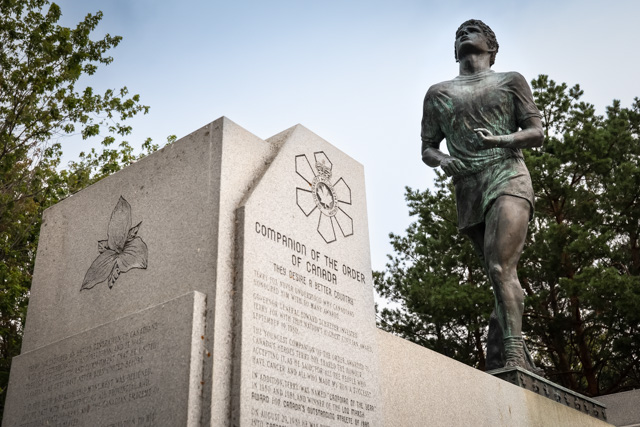
Fox, Terry Canadian amputee who initiated the Marathon of Hope to raise funds for cancer research but died before he could complete it. Unlike Rick Hansen, he is our non-problematic fave and no criticism of him is allowed in this house.
Foucault, Michel French scholar whose work has been useful in thinking about disability, mental illness and the institutions that serve and contain them. Known for the concept of biopolitics, which discusses how power is inscribed on the body. Also cited by virtually every humanities graduate student since the 1970s.
G
Gallagher, Hugh Gregory Writer and polio survivor, known for his biography of American president Franklin D. Roosevelt and his study of the doctor-patient relationship and the Aktion T4 program in Nazi Germany[12].
Gallaudet, Sophia Deaf educator and wife of Thomas Gallaudet.
Gallaudet, Thomas One of the founders of the American School for the Deaf.
Galton, Francis Widely considered one of the founders of the eugenics movement, Francis Galton Darwin was a cousin of Charles Darwin who used his theory of evolution by natural selection to argue for the “improvement” of the human race by means of selecting for desirable traits and discouraging those deemed undesirable from having children[13].
Goffman, Erving Sociologist whose work has been of great use to disability-rights movements. He is known for the concept of the total Institution, wherein every aspect of one's life is dictated by the institution and the institution forms a closed society. Also popularized our modern notion of “stigma” as “spoiled identity”; that is, of having a marked state of inferiority as perceived by others[14].
H
Hansen, Karina ME/CFS patient in Denmark, who was forcibly removed from her home and institutionalized because, in Denmark ME/CFS was seen as a psychological disorder, and Hansen's condition was attributed to her parents indulging delusions. Hansen was imprisoned in the hospital for several years without improvement, after which she was released to her family[15].
Hansen, Rick Canadian with a spinal cord injury who famously wheeled around the world to raise money for a cure. Has been criticized by disability activists for doing this at a time when they were making strides with disability rights, which then had attention taken away from them; for (like Christopher Reeve) fundraising for a cure that is not likely to exist in a useful form any time soon; and for building a foundation that offers accessibility certificates or certification for people and organizations taking courses, without these courses being in line with actual accessibility requirements in the jurisdictions that they're in[16].
Herman, Judith Psychiatrist and writer who originated the diagnosis complex post-traumatic stress disorder (CPTSD) and who described the effects of complex trauma in her work Trauma and Recovery. Although the diagnosis of complex post-traumatic stress disorder has not been formally recognized by the Diagnostic and Statistical Manual of Mental Disorders (DSM), there are many treatment modalities and therapists who recognize and treat it[17].
Heumann, Judith Teacher, writer, and widely considered "mother of the disability rights movement.” One of the founders of disability rights in the United States, she later worked in the Department of Education during the Clinton administration.
Hingsburger, David Support services professional and writer who was originally very controversial because he advocated for intellectually and developmentally disabled people to be able to have adult sex lives. He credited his time in the gay rights movement for his advocacy for sexual rights for everyone, but because the Canadian disability services sector at the time was extremely paternalistic, his gayness and advocacy led him to be branded by some as perverted. However, he was extremely influential in securing sexual and personal rights for disabled people. Although he did not begin his work when he was disabled, he later became disabled himself, and would often write about the different perspectives he had being a professional and someone who had acquired disabilities[18].
Hockenberry, John Disabled journalist who wrote for NPR and other outlets, and was able to go on very dangerous reporting assignments because for a long time his editors didn't know that he was disabled. Author of Moving Violations: A Memoir, he covered the ADA and other disability-rights stories as well as stories that had nothing to do with disability-rights.
J
Johnson, Harriet McBryde Lawyer and writer, widely known for the essays “The Disability Gulag” and “Unspeakable Conversations.” “The Disability Gulag” shone a light on how easy it is to a slide into institutionalization and the conditions there; “Unspeakable Conversations” tells the story of Johnson’s debate with philosopher Peter Singer about whether the killing of disabled infants is a moral good[19].
K
Keller, Helen Often considered one of the first American celebrities, known from her early childhood as a Deafblind girl who was taught to read and communicate by another blind person, her teacher Anne Sullivan. Keller was a journalist, an actor, a vaudeville performer, a commentator, and a biography writer, among many roles, but her work never achieved the fame that her childhood had bestowed upon her. She used her fame to advocate for her socialist and eugenicist ideals, and her disability allowed her to speak out about the harm done by not treating babies for syphilis passed on to them from their parents. She successfully advocated for a change in standard medical practice so that all infants’ eyes were treated with silver nitrate at birth, thereby saving the sight of thousands of babies[20].
Kramer, Larry Writer and AIDS activist who was one of the co-founders of ACT UP, and he was known for publishing the essay “1112 and Counting," which warned the gay community to the dangers of the AIDS crisis.
L
Lepofsky, M. David Lawyer and founder of the Accessibility for Ontarians with Disabilities Act (AODA) Alliance, as well as one of the principal architects of the AODA.
Lewis, Jerry Comedian, actor, and presenter of an annual telethon for children with muscular dystrophy. He was criticized for the pitying gaze that he bestowed on the recipients of this aid; many children who had served as poster children or “Jerry's Kids” spoke out later in life about the harms the telethon had done both to them personally and the cause of disability rights. (One example is that Lewis once said that he couldn't imagine having muscular dystrophy, as he would be “half a person.”)[21]
Lowenstein, Fiona Long-COVID advocate, and author of Body Politic’s Comprehensive Guide to Covering Long COVID, which helps media professionals avoid stigma and inaccuracies about this disease.
Lomax, Brad Member of the Black Panther Party and of the disability-rights movement in the United States, credited with being the bridge between these two movements, which allowed the Black Panthers to give disability-rights protesters mutual aid and enable them to continue their protests during the sit-ins about Section 504 of the Rehabilitation Act of 1973, which prohibited “recipients of federal aid from discriminating against any “otherwise qualified individuals with a disability.”[22]
O
Oliver, Mike Disability researcher and activist widely credited with coming up with the social model of disability. Author of The Politics of Disablement and The New Politics of Disablement, among others.
P
Perego, Elisa A scientific researcher and patient advocate, credited with coming up with the term “long COVID.”
Perl Kingsley, Emily Advocate for inclusion for children with Down syndrome, writer on the Sesame Street TV series, mother of a son with Down syndrome, educator and author of “Welcome to Holland,” which is universally beloved by mothers and mocked by their disabled adult children. [23]
Peters, Gabrielle Writer, director, advocate and co-founder of the Disability Filibuster, which attempted to stop the passage of an expanded assisted dying law in Canada. Peters has been one of the foremost voices to criticize the utility of Canada’s plastic straw bans and has exposed the inconsistent accessibility guidelines and costly certification programs of the Rick Hansen Foundation.
R
Reeve, Christopher Actor and director, known for playing Superman in the movie series and who was paralyzed after a horse-riding accident. Reeve became an advocate for spinal cord research and was criticized by the disability-rights movement and others (most notably, his own father) for focusing his efforts on a cure to the exclusion of all else, both in his advocacy and his personal life; for not using his influence to advocate for greater access and better quality of life for disabled people; and for making it seem as though a cure for spinal cord injury was imminent.[24]
Roberts, Ed One of the Rolling Quads, who were the earliest disabled students to attend the University of California (UC) Berkeley full time, despite being told there were no educational options for them to do post-secondary education. Widely considered one of the founders of the independent-living movement.
Roosevelt, Franklin Delano First, and so far only, wheelchair user to serve as president of the United States. Also the only US president to win four terms in office (he died in April 1945, part way through his fourth term). Although he referred to himself as a “cured cripple,” his medical records make clear that he never “overcame” his paralysis in any significant way; rather his rehabilitation was all about making him appear to have been cured. In addition to being the architect of the New Deal, which addressed the Great Depression as it affected the United States, Roosevelt revolutionized the practice of rehabilitation by purchasing what became one of the nation's foremost polio rehabilitation centres, in Warm Springs, Georgia. Before Roosevelt invested in Warm Springs, rehabilitation was largely punitive and paternalistic, but he made the centre into a place where, although people were under the care of doctors, much of their rehabilitation was done by socializing with one another and sharing what they had learned. Previously, people in rehabilitation centres were considered to have been there by their own fault, and the practice of rehabilitating them was partially a moral one, where it was believed disabled people had to overcome inborn laziness and do what they were told. Although Roosevelt helped many who, like himself, were judged suitable for rehabilitation (and who could get to Warm Springs and pay for it), his New Deal left out many disabled people who wished to be employed, and their Tin Cup protests did not do much good in getting them back on a path to employment. This actually set back the employment prospects of disabled people. This makes Roosevelt’s legacy extremely complicated from a disability-rights perspective[25].
S
Sanger, Margaret Founder of Planned Parenthood and proponent of eugenics.
Shakespeare, Tom Disability activist and scholar who has critiqued the social model as not reflecting the reality of impairment, and the academic study of disability as not concentrating on improving the actual material conditions of disabled people's lives.
Singer, Judy Sociologist widely credited with coining the terms “neurodiversity” and “neurodivergent,” which is the basis of the neurodiversity movement. This attribution has now come under scrutiny; reporting by Sara Luterman and Kate Sosin has shown that this was more of a community effort and not attributable to any one person[26].
Singer, Peter Philosopher and animal rights advocate who has taken the position that it may be more moral to be allowed to euthanize a disabled baby on the grounds that replacing that baby with a non-disabled baby would increase the amount of happiness in the world. Singer debated with Harriet McBryde Johnson on this position; although Singer believes that this euthanizing is permissible, he advocates against the killing of animals to use as meat and other uses.
Sontag, Susan Writer and public intellectual. In Illness as Metaphor and AIDS and Its Metaphors, critiqued the way that the illnesses of tuberculosis, cancer and AIDS in particular are used as shorthand for character, and the tendency of medical professionals to speak of these illnesses as though they are fighting a battle, which she believed did a disservice to patients. Her son's memoir of her death, though, is a heartbreaking account of her succumbing, not just to cancer, but also to the metaphor she had fought to escape in her own work.
Stiker, Henri-Jacques Author of A History of Disability.
Y
Young, Stella Teacher and comedian widely credited with coming up with the term “inspiration porn.” Popularized this in her TED talk “I'm Not Your Inspiration, Thank You Very Much."
SOURCES
- See Byline of Hope, the writings of Helen Keller, edited by Beth A. Haller (Advocado Press, 2015).
- See The Deaf History Reader, by John V. Van Cleve (Gallaudet University Press, 2006), and Susan Burch’s Signs of Resistance: American Deaf Cultural History 1900 to World War II (New York University Press, 2002).
- See Burch, Signs of Resistance.
- See Sins Invalid (https://sinsinvalid.org/about-sins/) and Stories We Don’t Tell (https://storieswedonttell.org/who-we-are), Crip Kinship by Shayda Kafai, and Care Work by Leah Lakshmi Piepzna-Samarsinha, both books from Arsenal Pulp Press.
- For more about braille, braille literacy, and Braille as an inventor, see Braille Literacy Canada (https://www.brailleliteracycanada.ca/en/braille/history) and “The Story of Louis Braille: Inventor of the Braille Code” (https://www.icoe.org/news/story-louis-braille-inventor-braille-code).
- For Buck v. Bell, see Buck v. Bell, 274 U.S. 200 (1927) (https://supreme.justia.com/cases/federal/us/274/200/) and Jasmine Harris’s “Why Buck v. Bell Still Matters,” Petrie-Flom Center, Harvard University, October 14, 2020, https://petrieflom.law.harvard.edu/2020/10/14/why-buck-v-bell-still-matters/.
- For more about Clark, see for example “How Justin Clark’s Fight for Independence Transformed Disability Rights in Canada, CBC Radio (https://www.cbc.ca/radio/sunday/november-25-2018-the-sunday-edition-with-michael-enright-1.4911588/how-justin-clark-s-fight-for-independence-transformed-disability-rights-in-canada-1.4911590) and the obituary for Clark in the Ottawa Citizen (https://ottawacitizen.remembering.ca/obituary/matthew-clark-1081698121).
- For more about Clerc, see the biography from Gallaudet University (https://gallaudet.edu/student-success/tutorial-center/english-center/reading-esl/esl-practice-reading-exercises/biography-of-laurent-clerc/), the entry in the online Deaf History (https://deafhistory.eu/index.php/component/zoo/item/laurent-clerc-2), and Van Cleve’s Deaf History Reader.
- For more about disability rights in the United States and Justin Dart, see the Center for Disability Rights, A Short History of Justin Dart, ‘Father of the ADA,’” https://cdrnys.org/blog/advocacy/a-short-history-of-justin-dart-jr-father-of-the-ada/.
- See, for example, Shut Away: When Down Syndrome Was a Life Sentence, by Susan McKercher (Goose Lane, 2019) and see Down’s publication in Hereditary 21 (1966) and archived at https://www.nature.com/articles/hdy196669.
- For more about Fauci, see https://www.niaid.nih.gov/about/anthony-s-fauci-md, and his 2024 autobiography, On Call: A Doctor's Journey in Public Service.
- See Gallagher’s Trust Betrayed: Patients, Physicians, and the License to Kill in the Third Reich and FDR's Splendid Deception: The Moving Story of Roosevelt's Massive Disability —And the Intense Efforts to Conceal It from the Public.
- For more about eugenics and Galton, see:
“Eugenics: Its Origin and Development (1883- Present),” National Human Genome Research Institute, https://www.genome.gov/about-genomics/educational-resources/timelines/eugenics.
the Harvard collection, including https://collections.countway.harvard.edu/onview/exhibits/show/galtonschildren/sir-francis-galton.
Darwin Correspondence Project, https://www.darwinproject.ac.uk/francis-galton. - See Erving Goffman, Asylums: Essays on the Condition of the Social Situation of Mental Patients and Other Inmates (1961) and Stigma (1963).
- For more about ME/CFS, see the documentary Unrest by Jennifer Brea, and MEpedia.
- See Gabrielle Peters, “Mulroney Is Dead But His Legacy Lives On: No One Is Required to Pretend It Is a Good One, Especially Not Disabled People,” G Peters (MsSineNomine) Substack, March 2, 2024, https://mssinenomine.substack.com/p/mulroney-is-dead-but-his-legacy-lives.
- See:
Allan Horwitz, DSM: a History of Psychiatry's Bible (Hopkins Press, 2021).
Herman’s Trauma and Recovery: The Aftermath of Violence (Basic Books, 1997).
Ellen Barry, “She Redefined Trauma. Then Trauma Redefined Her,” The New York Times, April 24, 2023, https://www.nytimes.com/2023/04/24/health/judith-herman-trauma.html.
Alexander Kriss, Borderline: Biography of a Personality Disorder (Penguin, 2024). - For more about Hingsburger, see “Remembering David” (https://nadsp.org/nadsp-news-remembering-dave-hingsburger/).
- See, for example, Johnson, “The Disability Gulag,” The New York Times Magazine, November 23, 2003, https://www.nytimes.com/2003/11/23/magazine/the-disability-gulag.html.
- See Kim E. Nielsen, A Disability History of the United States (Penguin, 2013), and Byline of Hope, edited by Haller
- Regarding Lewis, see the obituary in the CBC, 2017 (https://www.cbc.ca/news/entertainment/jerry-lewis-dies-obit-1.4254934) and the web site and documentary, The Kids Are All (https://thekidsareallright.org/).
- For more about Lomax, see for example, the documentary Crip Camp: A Disability Revolution (Netflix, 2020) and Black Disability Politics by Sami Schalk (Duke University Press, 2022).
- For more about Perl Kingsley, see her web site (https://www.emilyperlkingsley.com/emily-history) and an interview with her (https://www.cedarsstory.com/welcome-holland-interview-author-emily-perl-kingsley/).
- See, for example:
Charles Riley, Disability and the Media: Prescriptions for Change (University Press of New England, 2012).
Tom Shakespeare, Disability Rights and Wrongs Revisited (Routledge, 2014).
Mary Johnson, Make Them Go Away: Clint Eastwood, Christopher Reeve and the Case Against Disability Rights (Advocado Press, 2003). - See Hugh G. Gallagher, FDR's Splendid Deception (Vandamere Press, 1994), and FDR's Body Politics: The Rhetoric of Disability by Davis W. Houck and Amos Kiewe (Texas A&M University Press, 2003).
- See Sara Luterman and Kate Sosin, “Who Coined the Term Neurodiversity…?” The 19thNews, 2024, https://19thnews.org/2024/04/neurodiversity-term-judy-singer-autistic-advocates/.
SCOPE MENU
TVO is a registered charity #85985 0232 RR0001
Visit our other websites:
TVO.me  • TVO Today • TVO Learn • TVO ILC • TVOkids
Copyright © 2026 The Ontario Educational Communications Authority (TVO)
Terms of Use • Privacy Policy • Copyright